


From an eighteenth-century anecdote in Philadelphia to modern laboratory experiments: how asking for a small favour disrupts the logic of give-and-take and creates emotional closeness
By: Israel Namdar
In 1737, in pre-Revolutionary Philadelphia, Benjamin Franklin found himself in a situation that could have derailed his public career before it had even begun. At the time, he was serving as secretary of the Pennsylvania General Assembly — a seemingly administrative role, but one with real political weight, requiring careful navigation between competing interests and strong personalities.
His path was blocked by a newly elected legislator — wealthy, educated and well-connected — whose name Franklin never mentioned in his writings. Perhaps that omission was out of courtesy, but the hostility this man showed him was obvious. In a public speech before the Assembly, he sharply attacked Franklin, questioned his competence, and cast doubt on his integrity. For someone deeply conscious of his reputation, the threat was immediate.
Most people in that situation would instinctively choose one of two paths: retaliate and escalate the conflict or attempt to soften the rival with flattery and gifts. Franklin chose neither. Instead, he took a quieter, more calculated approach — one grounded in an intuitive understanding of human psychology that would only be formally supported by science more than two centuries later.
He knew his opponent prided himself on his private library. Franklin learned that the man owned a rare and intriguing book, a collector’s item few had access to. He wrote him a short, carefully worded note. He did not apologise. He did not attempt reconciliation. He simply asked to borrow the book for a few days.
The response was immediate. Flattered by the recognition of his literary taste, the legislator sent the book the same day. Franklin read it with interest and returned it a week later with a warm note of thanks.
At their next Assembly meeting, the former rival approached Franklin with notable politeness. From then on, he was willing to assist him, and the two eventually developed a friendship that lasted until the legislator’s death.
In his autobiography, Franklin expressed the insight that later became central to social psychology:
“He that has once done you a kindness will be more ready to do you another, than he whom you yourself have obliged.”
This idea, now known as the Benjamin Franklin Effect, challenges the simple logic of reciprocity. It suggests something counterintuitive: the path to someone’s heart does not always lie in what we give them, but sometimes in what we allow them to give us.

Cognitive Dissonance: The Discomfort of Inconsistency
To understand why Franklin’s subtle move worked, we need to look at the psychological mechanisms behind it. Two major theories help explain the effect: cognitive dissonance theory and self-perception theory.
Cognitive dissonance theory, proposed in 1957 by psychologist Leon Festinger, suggests that people are strongly motivated to maintain consistency between their beliefs, attitudes and actions. When a contradiction arises, it creates psychological discomfort — dissonance — which we are driven to reduce.
In Franklin’s case, the rival faced two conflicting thoughts:
- “I dislike Benjamin Franklin; he is my political enemy.”
- “I lent Benjamin Franklin a rare and valuable book.”
That inconsistency creates tension. One way to reduce it is to shift the attitude:
“Perhaps he isn’t so bad after all.”
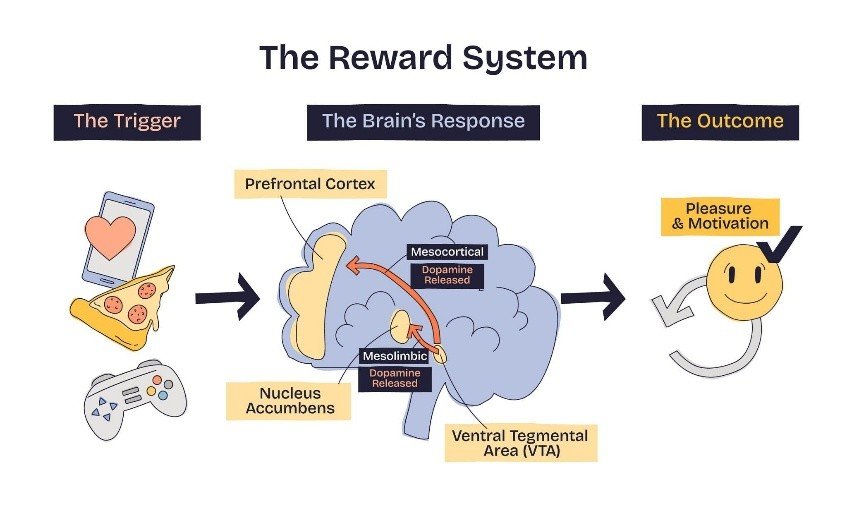
Recent neuroscience research, including fMRI studies by Drew Westen, suggests that when people encounter information that challenges their beliefs, emotional brain regions activate first. Once a justifying explanation is found, reward centres light up. In other words, the brain appears to “reward” itself for resolving internal conflict.
Self-Perception Theory
An alternative explanation was proposed in the 1970s by psychologist Daryl Bem. According to self-perception theory, we sometimes infer our attitudes by observing our own behaviour — especially when our feelings are not strong or clear.
From this perspective, the rival might simply have reasoned:
“I lent him a rare book. People lend books to friends, not enemies. So perhaps I see him as a friend.”
The key difference between the two theories lies in what drives the change. Cognitive dissonance involves psychological discomfort. Self-perception involves calm inference. Yet both lead to the same conclusion: action can shape emotion, and sometimes create it.
Laboratory Proof: The Jecker and Landy Experiment
For over two hundred years, Franklin’s story remained anecdotal. In 1969, psychologists Jon Jecker and David Landy tested the idea experimentally.
Students participated in a task where they could win money. Afterwards, they were divided into three groups:
- Personal Request Group – The researcher personally asked participants to return the prize money, explaining there was a funding shortfall.
- Institutional Request Group – An administrator asked for the money back on behalf of the department.
- Control Group – No request was made.
Later, participants rated how much they liked the researcher.
The surprising result: those who returned the money directly to the researcher rated him more favourably than the control group. The institutional request did not produce the same effect.
The critical factor was the personal nature of the favour. Doing something directly for someone shifted the attitude.
The Reverse Benjamin Franklin Effect
Like any psychological mechanism, it has a darker side.
If helping someone can increase our liking for them, harming someone can have the opposite effect. When we act cruelly, we experience dissonance between “I am a good person” and “I hurt someone.” Instead of changing behaviour, people often justify it by devaluing the victim.
This process — sometimes leading to dehumanisation — has been observed in contexts ranging from bullying to warfare.
Even everyday examples reflect this dynamic. Research into dog training, including work referenced by behavioural psychologist Zazie Todd, suggests that owners who use harsh methods may justify them by labelling the dog as “stubborn” or “dominant.” In contrast, consistent positive reinforcement not only improves behaviour but also strengthens emotional bonds.
Repeated action shapes perception.
Modern Applications
The effect has practical relevance across everyday life.
In dating, simple requests such as “Can you hold my drink for a second?” subtly create involvement and trust.
In professional settings, asking for advice can strengthen relationships. Rather than signalling weakness, it allows the other person to feel valued and invested in your success.
Sales professionals often use similar strategies. Instead of overwhelming clients with gifts, they encourage small acts of engagement:
“Could you check if this link works on your phone?”
“What’s your honest opinion on this design?”
Once someone takes action on your behalf, the dynamic shifts from persuasion to collaboration.
Ethical Considerations
Used thoughtfully, the Benjamin Franklin Effect can strengthen genuine relationships. Used cynically, it becomes manipulation.
Authenticity matters. When a request feels contrived or self-serving, the effect can reverse. Humans are highly sensitive to insincerity.
Cultural context also matters. In some Western cultures, asking for help can signal openness and trust. In parts of East Asia, where avoiding burdening others is strongly valued, a personal request may be seen as intrusive.
Final Thought
The Benjamin Franklin Effect highlights the paradoxical power of vulnerability. Asking for help is not always weakness. Sometimes, it is social glue.
In a world that prizes independence, the willingness to let someone assist you — even in a small way — can deepen connection.
So next time you encounter coolness or hostility, resist the urge to fight or flatter. Try asking for a small favour instead. It might just be the beginning of a lasting friendship.
Sources:
Franklin, Autobiography of Benjamin Franklin, Project Gutenberg, 2006
Festinger, A Theory of Cognitive Dissonance, Stanford University Press, 1957
Westen et al., “Neural bases of motivated reasoning,” Journal of Cognitive Neuroscience, 2006
Bem, “Self-Perception Theory,” Advances in Experimental Social Psychology, 1972
Jecker & Landy, “Liking a person as a function of doing him a favor,” Human Relations, 1969
Thornberg & Jungert, “School bullying and moral disengagement,” Aggressive Behavior, 2013
Rooney & Cowan, “Training methods and owner-dog interactions,” Applied Animal Behaviour Science, 2011
Messner, Reinhard & Sporer, “Compliance through direct persuasive appeals,” Social Influence, 2008
Niiya, “The Ben Franklin effect in Japan and the United States,” Journal of Cross-Cultural Psychology, 2016
Important note: the dog-training example is a conceptual analogy, not direct experimental proof in that specific context.


